Markets have spent much of 2026 focusing on the artificial intelligence theme, while becoming increasingly selective about which companies can justify their valuations.
Tariff uncertainty, a more opaque US Federal Reserve and closer scrutiny over capital spending have brought market risks back into focus.
For investors, this raises a practical question: where can you still potentially earn a reasonable return while waiting for greater clarity?
Bonds could play a useful role here – as they can provide steady income, portfolio diversification and some stability if market sentiment weakens.
Why bonds still make sense?
Two key reasons stand out.
First, investors can still earn an attractive carry. With uncertain policy rate direction, or even with interest rate easing pushed further out, yields on quality bond funds remain relatively appealing. Fullerton’s bond funds currently offer a yield-to-worst 1 profile ranging from about 2.3% p.a. to 5.7% p.a. 2 , depending on their duration and credit mix.
This can provide a potentially meaningful yield above cash, while awaiting opportunities.
Second, with rising market volatility, some investors may wish to complement their equity holdings with assets that can offer more stable income and help smooth overall portfolio returns.
In the SGD credit market, fixed income portfolios are typically anchored by financial institutions and real estate issuers, while software and other technology companies make up a relatively smaller share of the broader Asian credit universe. This sector mix can help bond investors achieve income and diversification, with return drivers that are differentiated from those in equity portfolios.
Five bond funds for different needs
For cautious investors, the Fullerton Short-Term Interest Rate Fund has a duration of 2.1 years, an average credit rating of BBB and a yield-to-worst of 2.3% after hedging (as of 30 June 2026).
1) Fullerton Short Term Interest Rate – Class A (SGD)
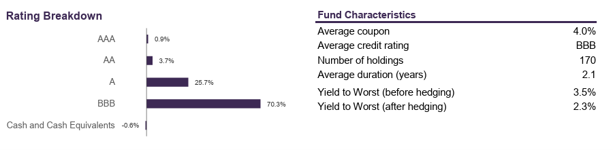
Source: Fullerton Fund Management Company Ltd and Bloomberg. Data as of 30 June 2026.
Note: Credit Rating: where the security is not rated by external rating agencies, Fullerton’s internal rating methodology will apply. Yield to Worst (YTW): refers to YTW in base currency taking into account the hedging cost. Not guaranteed. Past performance is not necessarily indicative of future performance.
Separately, the Fullerton SGD Income Fund may suit investors looking for a core Singapore-dollar bond holding. It has an average credit rating of BBB, a duration of about 4.4 years and a yield-to-worst of approximately 3.2% after hedging (as of 30 June 2026).
2) Fullerton SGD Income Fund – Class A
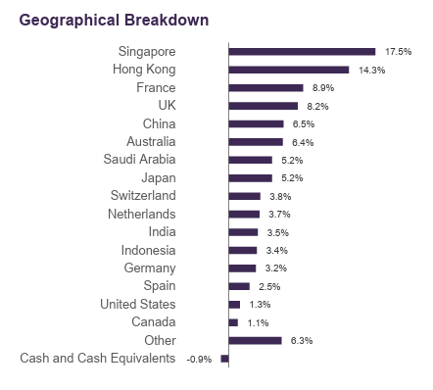
Source: Fullerton Fund Management Company Ltd. Data as of 30 June 2026. Note: Negative balances (in geographical breakdown) are due to cross month trades, and subscriptions/redemptions.
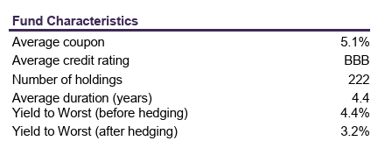
Data as of 30 June 2026.
Note: Credit Rating: where the security is not rated by external rating agencies, Fullerton’s internal rating methodology will apply. Yield to Worst (YTW): refers to YTW in base currency taking into account the hedging cost. Not guaranteed. Past performance is not necessarily indicative of future performance.
For investors seeking US-dollar income, Fullerton Lux Funds – Asian Investment Grade Bonds offers potentially higher carry. It has a duration of 4.7 years, an average credit rating of A and a yield-to-worst of around 5.1% (as of 30 June 2026). Its exposure is concentrated primarily in financials which include banks, financing companies as well as insurance firms.
3) Fullerton Lux Funds – Asian Investment Grade Bonds – Class I (USD) Acc
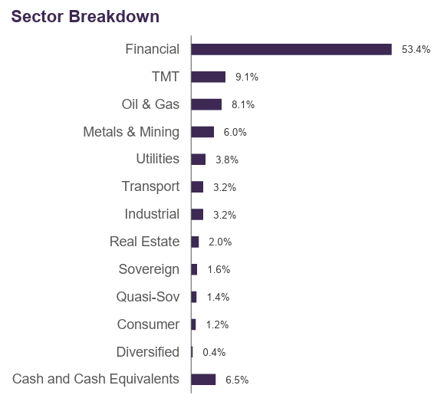
Source: Fullerton Fund Management Company Ltd. Data as of 30 June 2026.
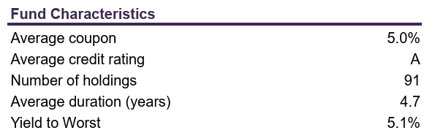
Data as of 30 June 2026.
Note: Credit Rating: where the security is not rated by external rating agencies, Fullerton’s internal rating methodology will apply. Yield to Worst (YTW): refers to YTW in base currency taking into account the hedging cost. Not guaranteed. Past performance is not necessarily indicative of future performance.
For investors comfortable with currency fluctuations, they may consider Fullerton Lux Funds – Asian Currency Bonds. The fund invests in Asian local-currency denominated government bonds and has an average credit rating of A (as of 30 June 2026). It may also be more suitable for investors with a longer investment horizon.
4) Fullerton Lux Funds – Asian Currency Bonds – Class A (SGD) Dist
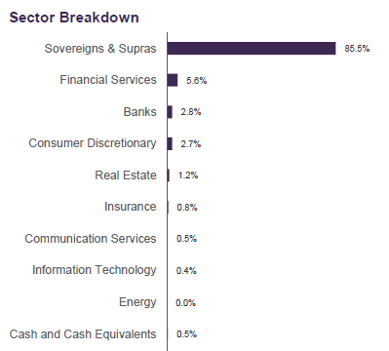
Source: Fullerton Fund Management Company Ltd. Data as of 30 June 2026.
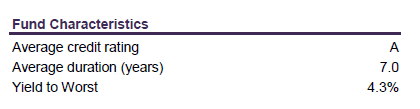
Data as of 30 June 2026.
Note: Credit Rating: where the security is not rated by external rating agencies, Fullerton’s internal rating methodology will apply. Yield to Worst (YTW): refers to YTW in base currency taking into account the hedging cost. Not guaranteed. Past performance is not necessarily indicative of future performance.
For those seeking potentially higher income, the Fullerton Lux Funds – Flexible Credit Income Fund offers a yield-to-worst of about 5.7% p.a. Separately, around 54% of the portfolio is invested in investment-grade bonds and 41% in high-yield credit, making it the higher-risk option (data as of 30 June 2026).
5) Fullerton Lux Funds – Flexible Credit Income – Class A (USD) Dist
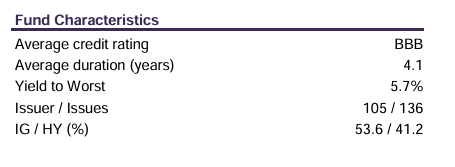
Source: Fullerton Fund Management Company Ltd. Data as of 30 June 2026.
Note: Credit Rating: where the security is not rated by external rating agencies, Fullerton’s internal rating methodology will apply. Yield to Worst (YTW): refers to YTW in base currency taking into account the hedging cost. Not guaranteed. Past performance is not necessarily indicative of future performance.
Key risks3
Bond funds are not capital guaranteed.
Bond prices may fall if interest rates rise, particularly for funds with longer duration. Issuers may also face financial stress or repayment difficulties. For unhedged share classes, currency movements can add further volatility for Singapore-based investors.
At this point in the market cycle, bonds can provide a useful middle ground between equities and cash. They offer income, diversification and are less directly impacted by the AI spending and monetisation benefits debate.
The key is to select bond funds that matches one’s risk preferences, investment horizon, and comfort level with regard to interest rate, credit and currency risks.
Explore Fullerton’s bond strategies at: https://www.fullertonfund.com/investment-funds/featured-funds/.
1 Yield to Worst (YTW): Refers to YTW in base currency taking into account the hedging cost. Not guaranteed. Past performance is not necessarily indicative of future performance.
2 Refers to the YTW profile range of the various bond funds (as of 30 June 2026): Fullerton Short Term Interest Rate Fund, Fullerton SGD Income Fund, Fullerton Lux Funds – Asian Investment Grade Bonds, Fullerton Lux Funds – Asian Currency Bonds, Fullerton Lux Funds – Flexible Credit Income.
3 Please refer to the respective fund’s prospectuses for the full list of risk disclosure.
Publication date: August 2026.
Important Information:
This publication is for information only and your specific investment objectives, financial situation and needs are not considered here. The value of units in the Fund and any accruing income from the units may fall or rise. Any past performance, prediction or forecast is not indicative of future or likely performance. Any past payout yields and payments are not indicative of future payout yields and payments. Distributions (if any) may be declared at the absolute discretion of Fullerton Fund Management Company Ltd (UEN: 200312672W) (“Fullerton”) and are not guaranteed.
Distribution may be declared out of income and/or capital of the Fund, in accordance with the prospectus. Where distributions (if any) are declared in accordance with the prospectus, this may result in an immediate reduction of the net asset value per unit in the Fund. Applications must be made on the application form accompanying the prospectus, which can be obtained from Fullerton or its approved distributors. You should read the prospectus and seek advice from a financial adviser before investing. If you choose not to seek advice, you should consider whether the Fund is suitable for you. The Fund may use or invest in financial derivative instruments. Please refer to the prospectus of the Fund for more information.
This advertisement or publication has not been reviewed by the Monetary Authority of Singapore.